19 Aug 2026
घाटी की गूंज: मनाली का प्राचीन इतिहास
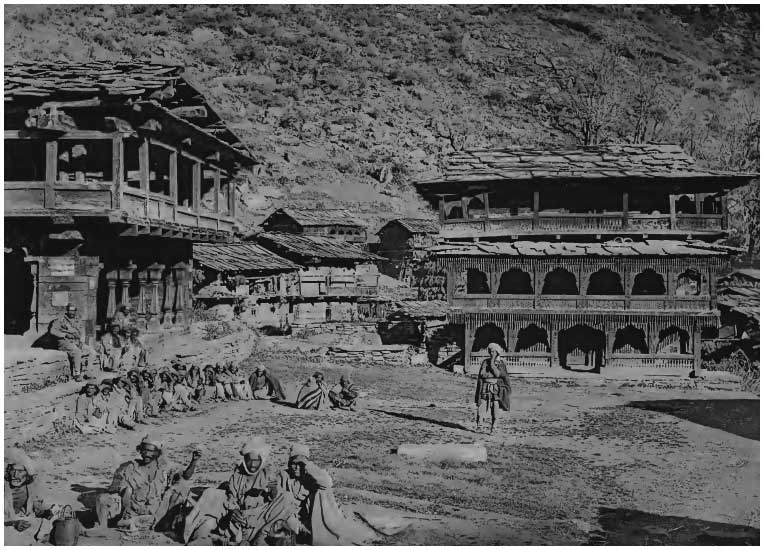
Nestled in the high Himalayas of Himachal Pradesh, Manali is widely known as a bustling resort town framed by snow-capped peaks and pine forests. Long before it became a refuge for travelers, the Kullu Valley was steeped in sacred myths, ancient trade routes, and colonial transformations.
The Cradle of Humanity
The name Manali derives from "Manu-Alaya", translating to the "Abode of Manu". In Hindu cosmology, Sage Manu was the progenitor of humanity and the author of early laws. According to legend, when a great deluge swept over the earth, Lord Vishnu appeared as Matsya (a giant fish) to guide Manu's ark to safety. As the waters receded, Manu stepped ashore in this serene valley to recreate human life, earning the region its reputation as the "Valley of the Gods". Today, Old Manali houses the country's only temple dedicated to Sage Manu.
Epic Legends & Medieval Kings
Manali's heritage extends deep into the Indian epics:
* The Mahabharata Connection: During their exile, the Pandava brothers traversed the Kullu region. Bhima famously defeated the demon Hadimb and married his sister, Hidimba. Built in 1553 CE, the wooden, pagoda-style Hidimba Devi Temple remains a central cultural landmark nestled in the Dhungri forest. * Sage Vashishta & River Beas: Legend states that Sage Vashishta threw himself into the river after losing his sons, but the sacred waters untied his bonds and washed him ashore safely, leading to the ancient hot springs that bear his name today. * Royal Rule: In the 17th century, Raja Jagat Singh incorporated Manali into the Kingdom of Kullu, establishing Lord Raghunath as the presiding deity of the valley.
Crossroads of the Ancient Silk Route
Before modern highways were paved, Manali served as a crucial stopover on the ancient trade route connecting the Indian subcontinent to Ladakh, Tibet, and Central Asia. Merchants and nomadic tribes navigated these treacherous mountain passes, transporting silk, spices, wool, and precious stones along the Beas River.
The British Influence & Modern Era
In the late 19th and early 20th centuries, British officials established summer retreats in Manali. They introduced British flora, trout fishing in the streams, and laid the foundation for the region's famous apple orchards.
Following Indian independence, infrastructure improvements made the hidden valley accessible to the world. What began as a quiet, sacred sanctuary has evolved into a premier mountain destination—where ancient traditions still live alongside the rush of alpine adventure.